Staff Culture + Climate
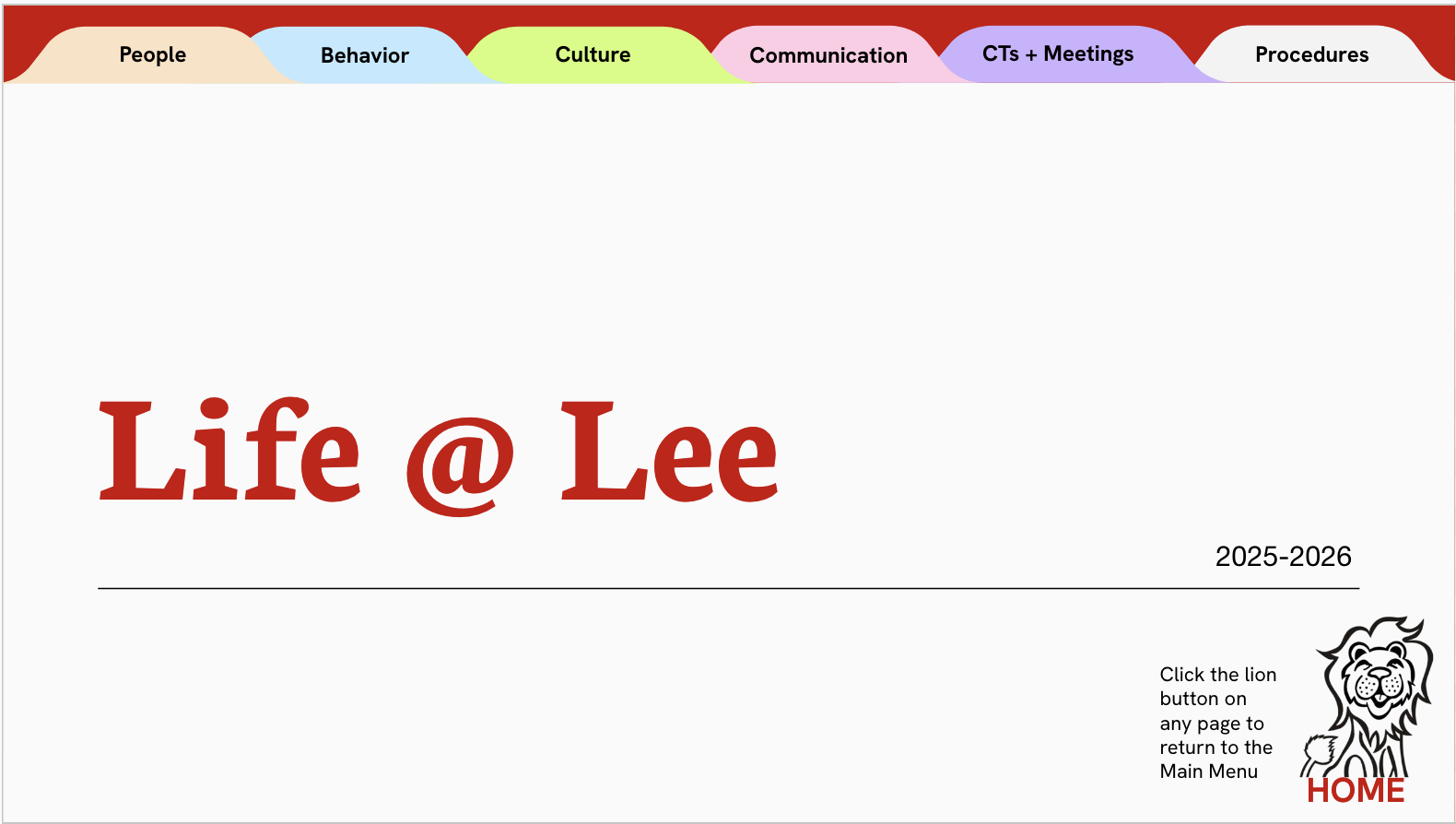
This project is an interactive, navigable guide built in Google Slides to support staff who are new to our building. Covering six categories including people and roles, behavior systems, cultural traditions, communication norms, collaborative team structures, and daily procedures, it was self-directed during my practicum and designed to make the unwritten rules of our school visible and accessible to anyone joining our team.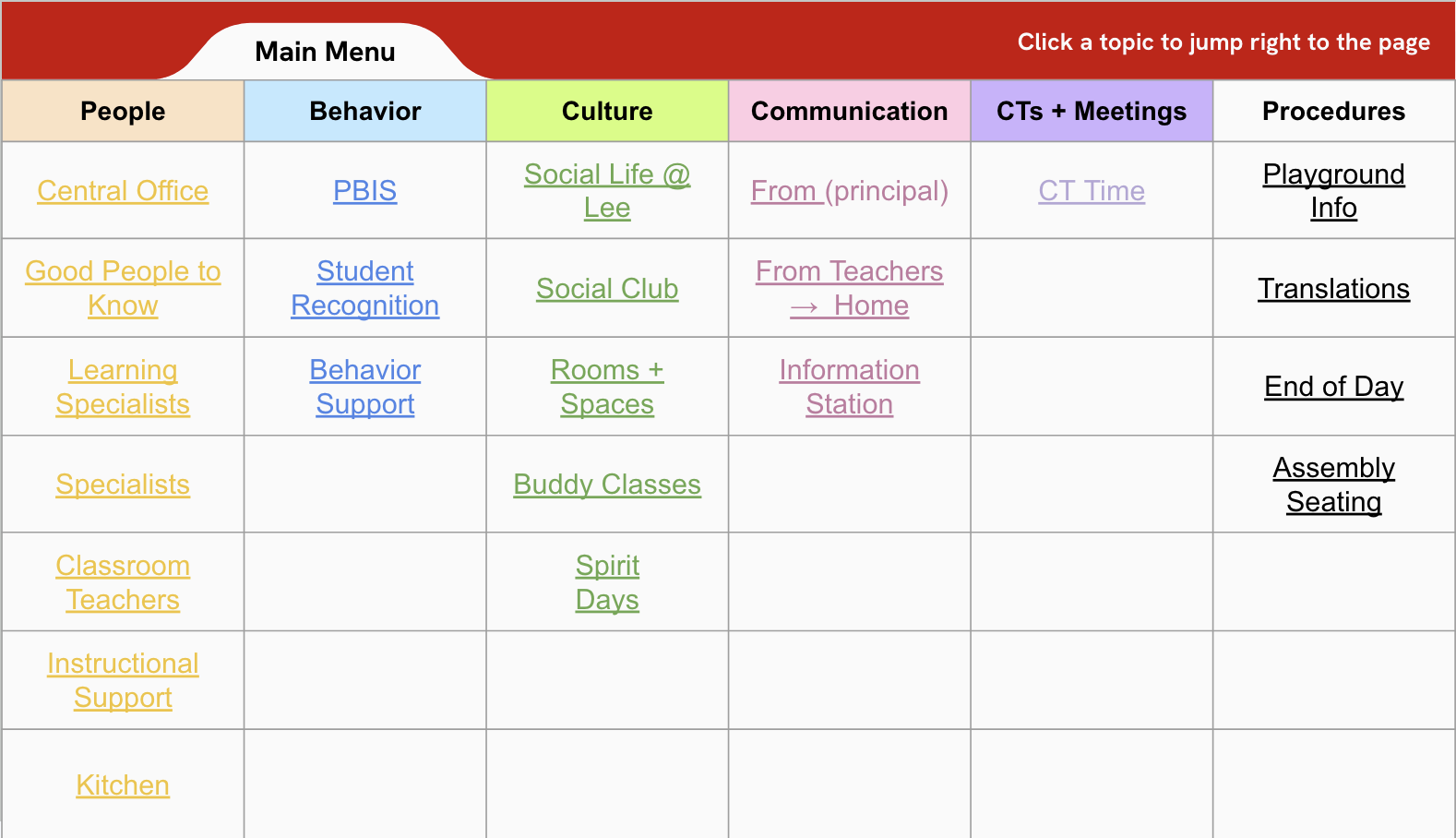
Growth Through Challenge
Familiarity makes the invisible impossible to see
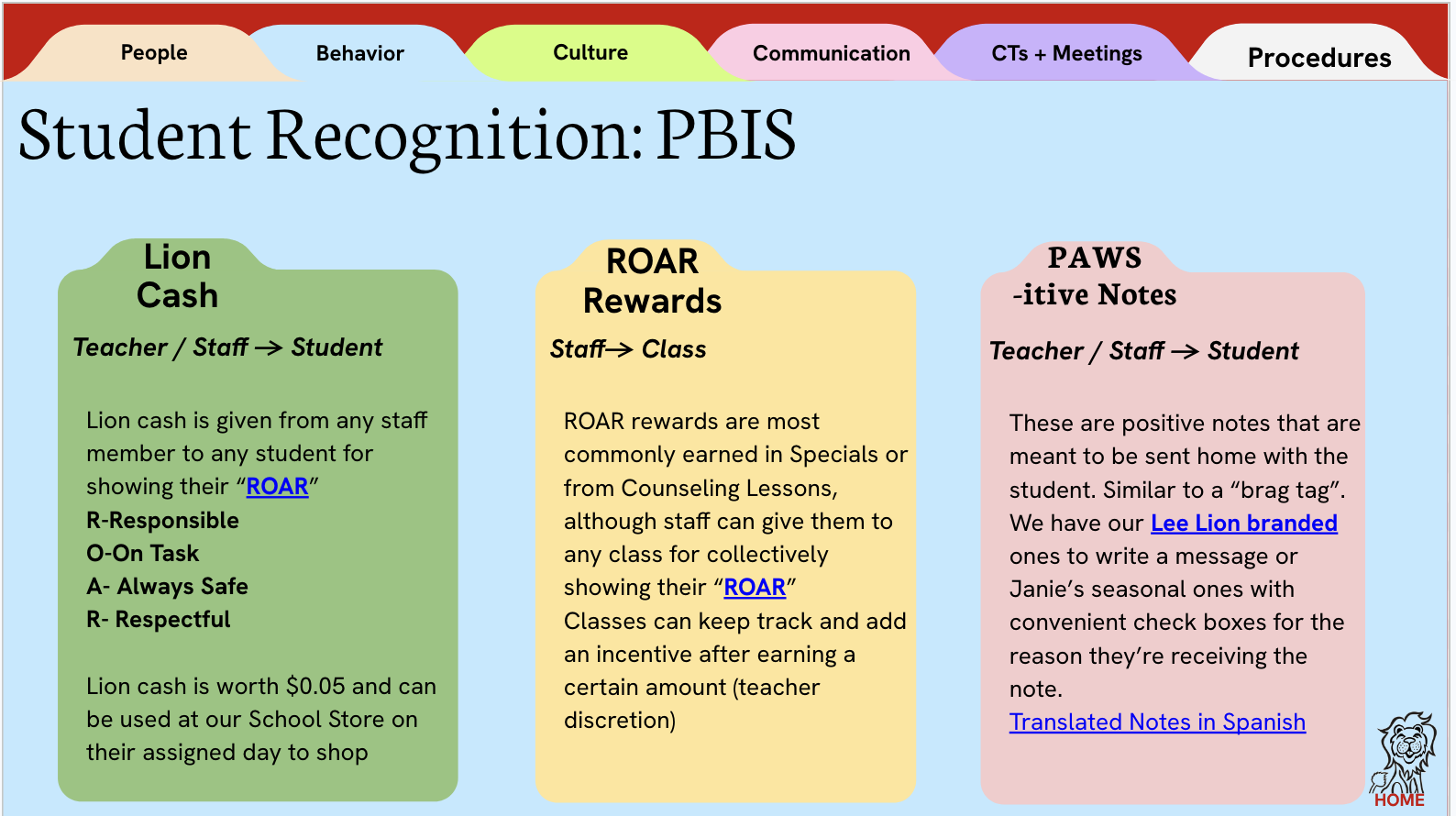
A meaningful part of my practicum was self-directed. Rather than waiting for opportunities to be handed to me, I made a list of projects I believed should exist and built them. This was one of them. Deciding what to include meant thinking carefully about what a new staff member genuinely needs to know versus what feels obvious only because familiarity has made it invisible. Things like how students enter and sit during assemblies, how our positive behavior system actually works in practice, that all communication going home must be translated, that a staff book club exists and you don't even have to read the book to attend. None of these things are in a handbook. They live in the muscle memory of people who have been around long enough to forget they ever learned them.
Leadership Strengths // Modeling
Access to information is not just a student issue, it’s a staff issue too
What this project confirmed is that access to information is not just a student issue. It is a staff issue too. New teachers and support staff who feel like outsiders to a building's culture are less likely to take risks, ask for help, or feel a genuine sense of belonging. That affects how they show up for kids. Building this resource was an act of inclusion before anyone had to feel excluded. It also pushed me to think like someone who was seeing our building for the first time, which is a perspective I want to hold onto as an administrator. The longer you are somewhere, the harder that becomes. This project was a reminder to keep asking what we have stopped explaining.
Reflective Revisit // Next Steps
A resource is only as good as the culture around it
If I could do one thing differently, it would be to build this collaboratively from the start rather than largely on my own. The resource reflects my perspective on what matters and what gets missed, but a newer staff member's perspective would have made it sharper. The things I thought to include are the things I noticed through someone else's eyes. The things I missed are probably the things I still can't see in myself. Inviting a newer colleague into the design process would have surfaced those blind spots and made the final product more genuinely useful.
Looking forward, I would want to develop a more formal onboarding structure around something like this. A resource is only as good as the culture around it. If it gets shared once during inservice week alongside everything else, it will get lost like everything else shared during inservice week. The next step is thinking about how to build it into a real onboarding experience, one that is paced, relational, and returned to over time rather than front-loaded and forgotten.
TSPC Standards Alignment
Each project in this portfolio is intentionally connected to Oregon's Principal License Standards, demonstrating how my practicum experiences built real leadership readiness across multiple domains.
By clicking the link below, you’ll be directed to the government website for a full description of each standard of practice.
-
A shared culture doesn't build itself. It gets built through intentional acts of inclusion, and this was one of them. When new staff have access to the unwritten rules of a building, they can participate in its culture rather than spend the year decoding it from the outside.
-
Institutional knowledge is a form of privilege. The people who have it move through a building with ease. The people who don't are left guessing. This project was an attempt to democratize some of that knowledge, to make the invisible visible, and to lower the barrier to belonging for anyone new to our team.
-
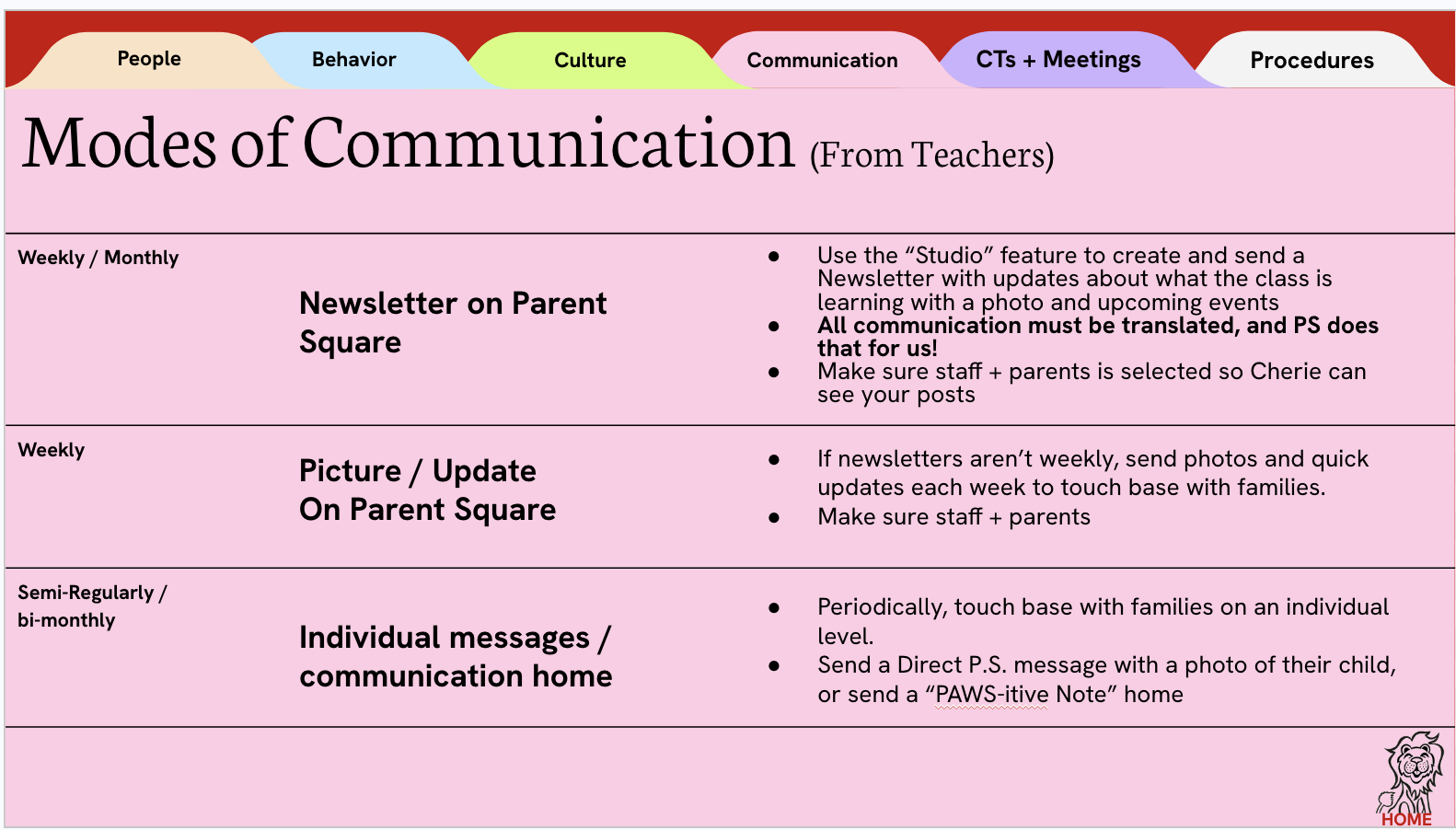
Part of what this resource covers is how we communicate with families, including translation requirements, Parent Square expectations, and the tone we try to bring to individual family outreach. Orienting new staff to those norms is an investment in the families we serve, not just the staff we're welcoming.
-
Staff who feel like they belong stay longer. Staff who spend a year feeling like outsiders often don't come back. Building a culture where new staff are set up to succeed from day one is a retention strategy as much as it is a hospitality one.