Math Curriculum Adoption
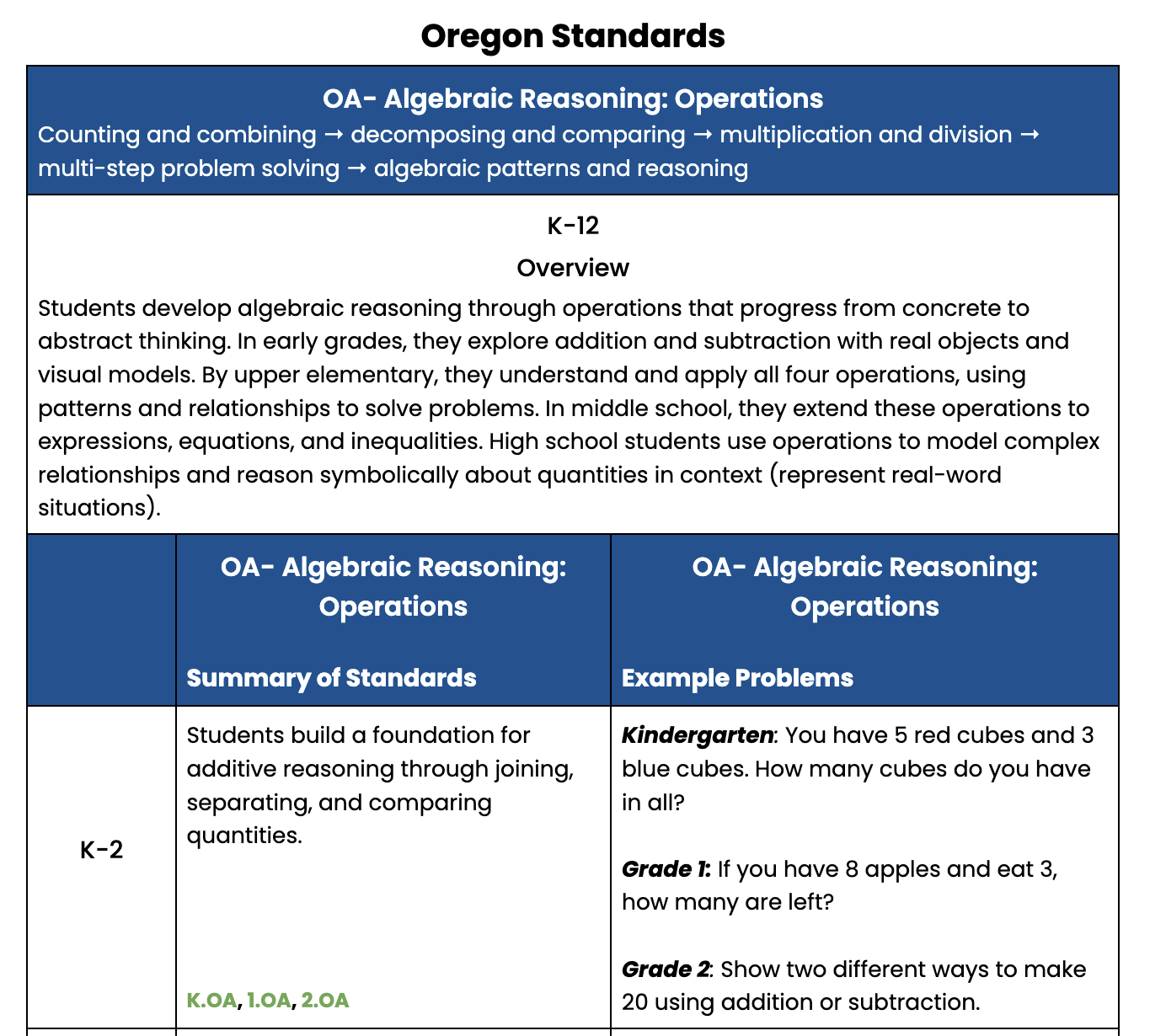
Click on the image above to navigate to the standards progression resource
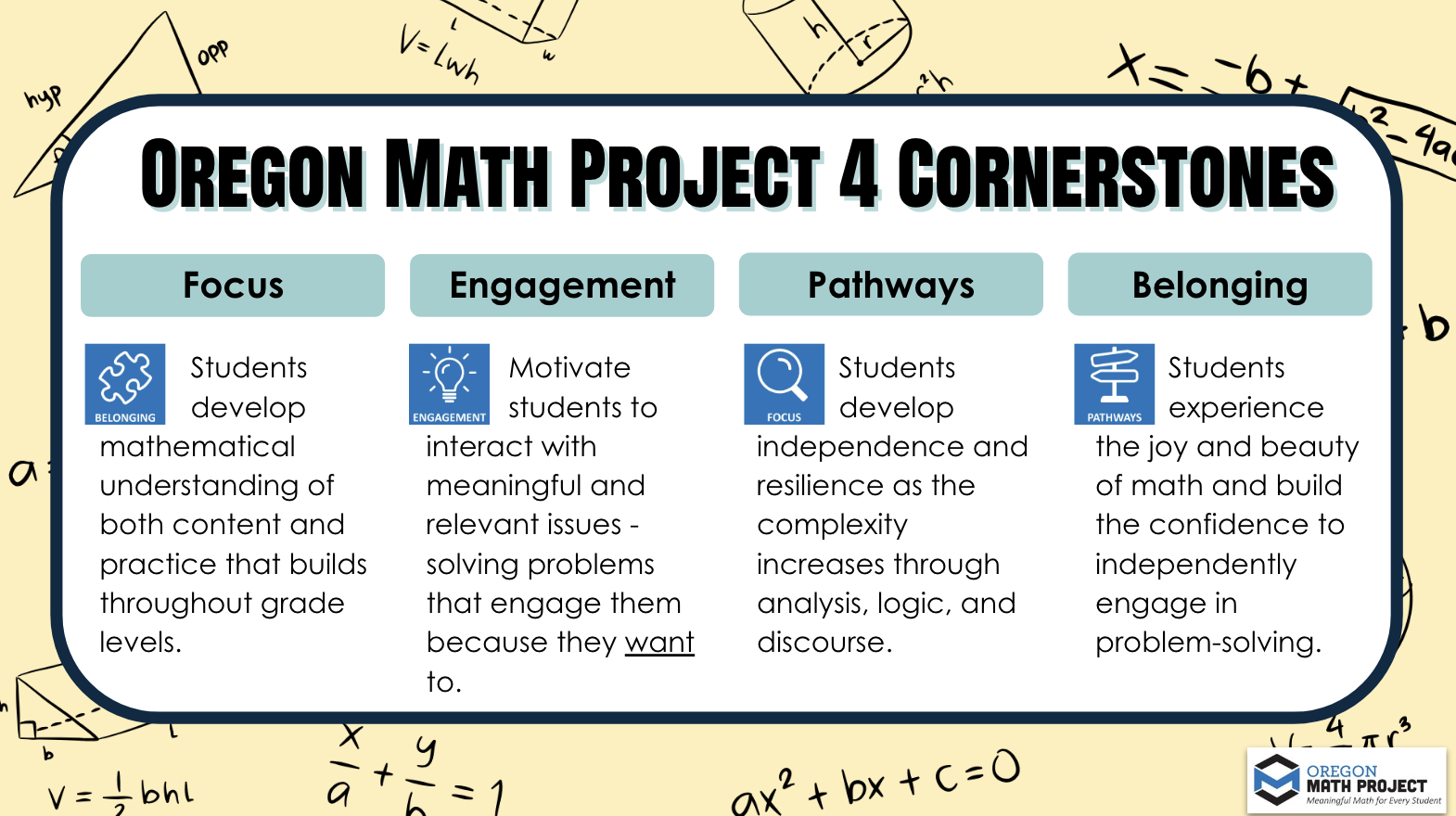
This project represents my involvement in the district's K–12 math curriculum adoption process. My contributions included building a standards progressions resource, developing companion problem sets for curriculum reviewers, completing all four Oregon Math Project Canvas modules including the administrator track, and facilitating vision and belief work with staff across grade bands.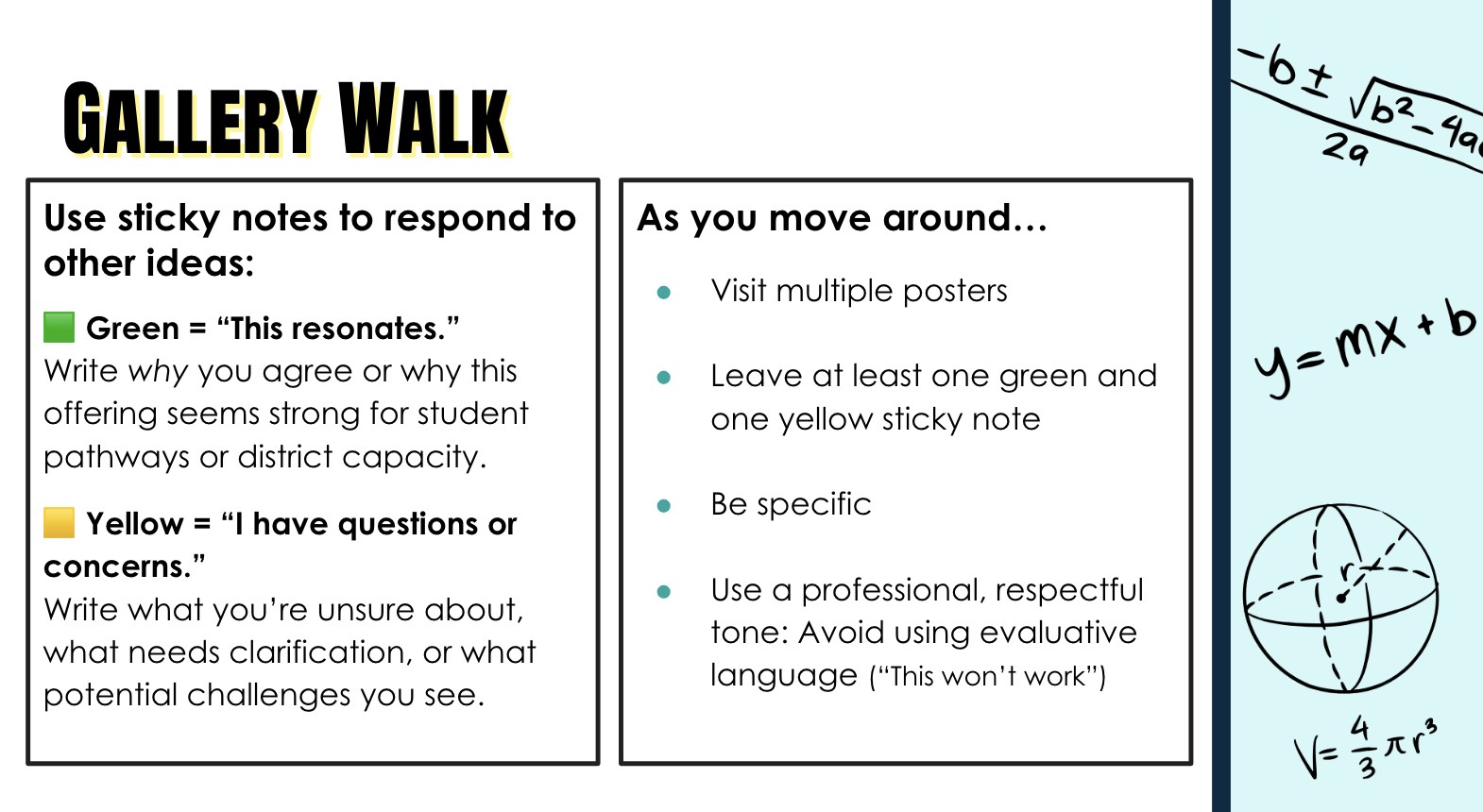
Growth Through Challenge
Relationships cross the lines that expertise alone do not
Two things made this work difficult. The first was time. Much of my learning happened while I was building, working through every domain and grade band before the committee had even fully gathered. I wasn't sure how much of it would ever be used, but I believe in building things that should exist before someone asks for them. The second challenge was coming into a secondary world as an elementary person. K-5 felt natural. I have taught every grade from first through sixth and the content and culture were familiar. Middle and high school were completely new territory. Having done the foundational standards work before stepping into those conversations gave me enough fluency to stay in the room and still contribute meaningfully, catching misconceptions and offering clarity when appropriate.
This work also confirmed something I already knew about myself. Relationships are a strength. It is not particularly common for elementary and secondary educators to move comfortably between each other's worlds, and the distance between those cultures is real. That said, I found I could connect across that divide, bring people into conversation with each other, and create enough trust that voices which might otherwise stay quiet felt comfortable speaking up. These committees gave me more evidence of something I intend to keep building on.
Leadership Strengths // Modeling
The quality of a decision is shaped by the process that comes before it.
What this process confirmed is that I lead with curiosity about people's experience rather than assumptions about it. When a secondary teacher expressed frustration about where students were arriving from elementary school, I didn't get defensive. I was able to see their frustration and had the experience to speak to it. That instinct is what allowed me to move between worlds that don't typically talk to each other and still be useful in both.
The modeling moment came from watching the Teaching and Learning team hold the vision work with real patience. They could have rushed straight to vendor presentations. Instead, they created space to examine beliefs first. That sequencing was intentional and disciplined. I am carrying it forward as a leadership principle.
Reflective Revisit // Next Steps
Not all students need calculus. Narrow pathways close real doors
The experience I want to return to is not one I would redo. It is one I want more of. The conversations about student pathways ended before they were finished, and the most consequential questions haven't been resolved yet. Not all students need calculus. Some need statistics, financial literacy, or data science. Narrow pathways that funnel every student in one direction leave a significant portion behind and close real doors. A district serious about equity in math has to be willing to interrogate the pathway structure itself.
That is the work I want to grow into. I was part of naming the problem during this practicum. The next step is developing the capacity to help design solutions, to understand the operational levers well enough to move them, and to bring secondary staff along in a way that feels collaborative. That requires a depth of secondary systems knowledge I am still building, but I am closer to being ready for it than I was when this started.
TSPC Standards Alignment
Each project in this portfolio is intentionally connected to Oregon's Principal License Standards, demonstrating how my practicum experiences built real leadership readiness across multiple domains.
By clicking the link below, you’ll be directed to the government website for a full description of each standard of practice.
-
The vision work I supported asked our district to articulate what we believe math education is for and who it is designed to serve. Building the standards progression resource made that vision concrete. When teachers can see how mathematical thinking develops across thirteen years, the question of what any single grade level is responsible for becomes clearer and more honest.
-
being part of the tracking conversation required me to hold tension between institutional norms and a sociopolitical reality. Our pathway structure does not serve all students equally. Naming that honestly, without assigning blame, and staying in the room for the discomfort that followed, is what this standard looks like in practice.
-
Which students get access to which mathematics is one of the most consequential decisions a district makes. My new-found advocacy for examining pathway structures and my insistence that the adoption process center students who have historically been underserved by secondary math is a direct expression of this standard.
-
Completing the Oregon Math Project modules, building the standards progression resource, and supporting curriculum review across the K–12 grade bands are all direct applications of instructional leadership. The work was grounded in standards and designed to improve how adults in this system think about teaching and learning mathematics.
-
My most consistent role in this process was as a thought partner for colleagues working through uncertainty. Not through formal training, but through the kind of sustained, curious engagement that helps people think more clearly about the work in front of them.